.png)
News & Blog
How much sleep does a startup founder actually need?
Startup founders need 7-8 hours of sleep, not as a lifestyle preference but as a performance requirement. Research shows that after 14 nights of 6-hour sleep, cognitive performance equals 24-48 hours of total sleep deprivation and the dangerous part is you won't feel impaired. The CEO job runs on decision quality, risk assessment, and emotional regulation. All three degrade significantly without adequate sleep.
Founders still romanticize running on five hours of sleep as a signal of grit. It isn't. It's one of the quietest ways to sabotage your judgment and the long-term trajectory of your company.
I know because I did it for years. And I have the story to prove it.
The Meeting That Woke Me Up
It was 2008. I was sleeping four to five hours a night and had been for a while, just powering through on caffeine and adrenaline. We needed to raise our Series A. I had pitched 90 VCs. 89 had passed or ghosted - the passive pass that VCs do.
I was at the one-yard line with the last one still alive. We were about to get a term sheet. They asked me to meet with one of their EIRs who had run an ad-supported business, which was relevant to our model. It had been a terrible sleep week. I did what I'd gotten used to doing - I pounded caffeine and pushed through.
Mid-meeting, talking about the business model, I couldn't do simple math. The guy must have thought I was a complete idiot. We didn't get the term sheet.
That was my wake-up call. If I couldn't get through a basic meeting, how was I making the complex decisions required to run a startup? And how many other meetings had I been in where I thought I sounded sharp but clearly didn't?
Now contrast that with the Benchmark round. By then I had fixed my sleep. I slept 7.5 hours the night before the partner meeting, went for a run in the morning, walked in clear. We had less user growth than we'd had for the Series A. We were six weeks from running out of cash. We closed the deal. There were other factors - obviously. But I was sharper and more present, and it showed.
What the Science Actually Says
Most founders who sleep six hours think they're fine. That's the problem.
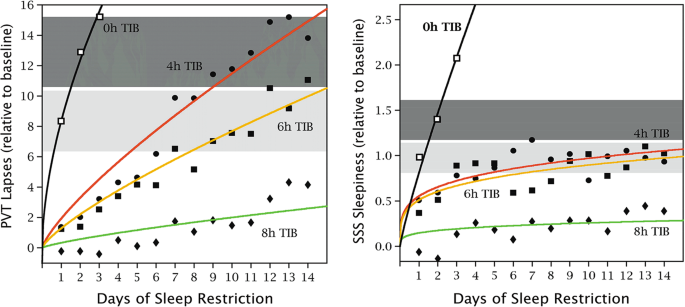
The Van Dongen study from 2003 is one of the most referenced sleep studies in the world. Researchers divided participants into groups sleeping eight, six, four, or zero hours per night and tracked cognitive performance over 14 days. The results are hard to argue with. After 14 nights of sleeping six hours, cognitive performance was equivalent to going without sleep for 24 to 48 hours straight.
The more unsettling finding: the six-hour group didn't feel that impaired. They reached a new normal. Their subjective sense of sleepiness flattened out even as their brain continued to degrade. They thought they were fine. They weren't.
This is exactly the trap founders fall into. Sleep deprivation impairs the ability to assess risk accurately, slows reaction time, degrades memory, and reduces the capacity to distinguish between what matters and what doesn't. These are not peripheral functions. They are the core of the CEO job.
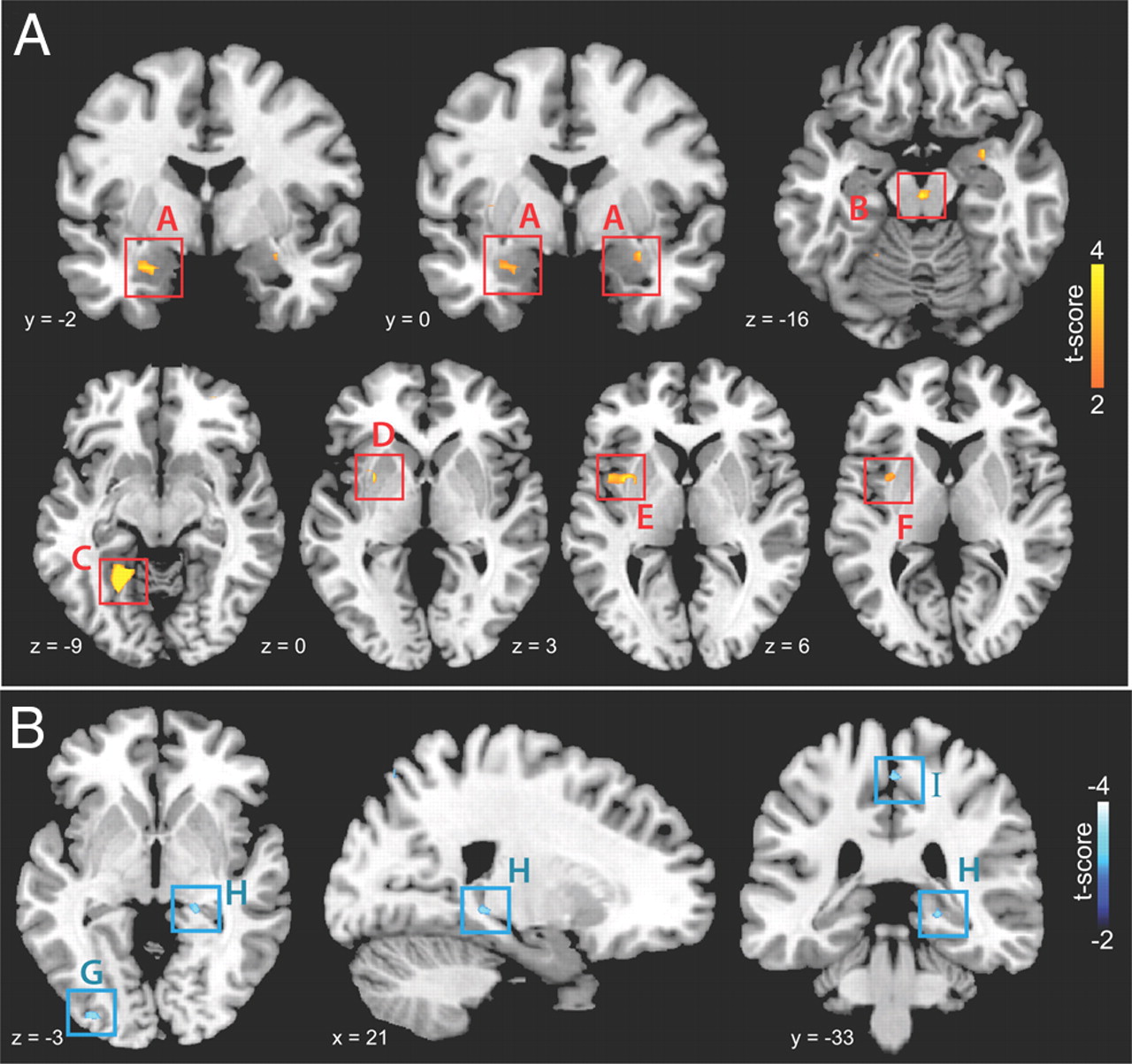
Brain imaging research shows that sleep-deprived individuals have dampened responses to both rewards and losses - meaning poor risk assessment in both directions. You miss opportunities and you underestimate threats. In a startup, that combination is expensive.
The Founder's Job Runs on Cognitive Quality
The founder's job is not to do the most tasks. It's to make the highest-leverage decisions with the greatest clarity and to maintain steady emotional regulation in the face of constant volatility.
Short nights create fake emergencies. Everything feels urgent. Your time horizon narrows. You lose the ability to zoom out and see what actually matters. The best strategic thinking rarely comes from a depleted brain.
Founders push back on this. The two responses I hear most often: "I don't need that much sleep, I feel fine" and "Elon doesn't sleep much." On the first point - the Van Dongen data says otherwise. The feeling of being fine is part of the impairment. On the second point - running a company into the ground while sleeping four hours is still running a company into the ground. The sample size of one does not override the research. Also, you’re NOT ELON.
The recommendation is straightforward: seven to eight hours. Not as a luxury. As a performance requirement.
What Actually Fixed My Sleep
After the Series A miss, I changed how I approached sleep the same way I approached other operational problems - systematically. These are the things that worked for me and that I now share with the founders I coach.
Same wake time every day, including weekends. Your body runs on a clock. Consistency anchors it. This one change alone makes a measurable difference within a week.
No screens within an hour of bedtime. No phone, no TV, nothing. Screens trick your brain into thinking it's daytime and prevent the wind-down your mind needs. I dim the lights, read, or put on music. Just chill.
No alcohol. I know. But alcohol reduces the quality of sleep even when it helps you fall asleep faster. The sleep you get isn't the same.
Phone out of the bedroom entirely. I leave mine in the kitchen at 8pm and don't look at it until 8 the next morning. If you can't do that yet, start by leaving it outside your bedroom door. The goal is removing the temptation and giving your brain a clear signal that the day is over.
None of these are complicated. All of them are harder to actually do than they sound. But the compounding effect over weeks and months is significant.
The Competitive Advantage Nobody Talks About
Almost everyone who is chronically under-rested believes they're the exception. Almost no one is.
If your job had a linear time-to-output ratio - like a lawyer billing hours - then burning yourself out might have some logic. But as a founder, especially once you have a team, your entire output is really four or five critical decisions a year and your ability to lead people through uncertainty. The quality of those decisions depends entirely on your mental state.
Getting enough sleep is one of the simplest competitive advantages available. Your competitors are also sleep-deprived. The founder who shows up to the board meeting sharp, clear, and regulated - while everyone else is running on fumes - has a real edge. It's not glamorous. It doesn't make for a good story on Twitter. But it works.
The Bottom Line
Seven to eight hours. Consistent wake time. Phone out of the room. No screens before bed.
That's it. Not complicated. The founders I coach who take this seriously notice the difference within two weeks - clearer thinking, better emotional regulation, faster decisions.
Your company runs on the quality of your decisions. Your decisions run on the quality of your mind. And your mind runs on sleep. It's not a soft lifestyle recommendation. It's an operational one.
If you want to talk about how you're operating as a CEO - sleep and everything else - book a call.


.png)
.png)